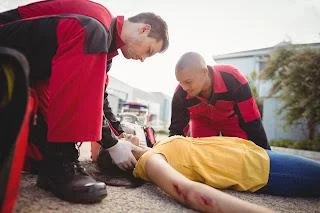
**How to Manage a Traffic Accident** Traffic accidents can range from minor incidents, such as a bicycle crash, to much more serious events like vehicle collisions. Before providing assistance to any casualties, ensure that the incident area is safe. This protects you, the casualties, and other road users. Once you have determined that the area is safe, quickly assess the casualties and prioritize their treatment. Administer first aid to anyone with life-threatening injuries before addressing others. Call the emergency services or an ambulance for help, providing as much detail as possible about the incident, including the number and ages of casualties and the types of injuries sustained.
**What to Do? Ensure Safety:**
Make sure the incident area is safe for yourself and others. Park safely and well away from the scene of the incident. Turn on your hazard lights and wear a high-visibility jacket if you have one. 2. **Establish a Safe Zone:** Ask two nearby drivers to help protect the incident area by parking a safe distance away and turning on their hazard lights. If you have warning triangles, use them to alert other drivers to your presence. By the time you attend to the casualties, bystanders can assist with this effort. 3. **Secure Vehicles:** Switch off the ignition of all damaged and surrounding vehicles and, if possible, disconnect the battery. This is particularly important for large diesel vehicles, which often have specific indicators on the exterior. 4. **Stabilize Vehicles:** Apply the handbrake, put the car in gear, or block the wheels if the vehicle is upright. If it is on its side, prevent it from rolling over further, but do not attempt to move it. 5. **Stay Alert:** Be aware of potential dangers, such as traffic, and ensure that no one smokes in the vicinity of the incident. Call the emergency services if you notice damaged power lines, spilled fuel, or vehicles carrying hazardous substances. **Assessing the Casualties:** 1. Call the emergency services and request an ambulance. 2. Quickly assess the casualties by conducting a primary survey, treating anyone with life-threatening injuries first. 3. Assume that anyone involved in the accident may have neck or spinal injuries. 4. Treat casualties in the position you find them, if possible, supporting their head and neck at all times. 5. Search the surrounding area for any additional casualties who may not be near the incident, and enlist the help of others if needed. 6. If anyone is trapped under a vehicle, the fire service will need to assist them. 7. Monitor the casualties and record their breathing, pulse, and level of response. By following these steps, you can effectively manage a traffic accident and help to ensure the Safety of all involved.
| 



.png)

Comments
Post a Comment
Thank you, most welcome, 👍